Those Who Danced for the Bombing of Their Own Cities: A Bitterness Deeper Than Any Bomb
Narrative of War from Within
Jila Baniyaghoob*
Translated by Raha Sabet Sarvestany
IRWomen**
Just minutes after the arrival of the year 1404, I wrote to two of my closest friends: “This is the first New Year’s moment in my life when I broke down and burst into uncontrollable tears. Perhaps because, like many others, I sense that this year will be a difficult one for Iran: a year of blood, a year of tears, a year of death, a year of fire…”
One of them replied that she felt exactly the same. In that heavy, bitter silence, I still allowed myself a fragile hope: that even if the age of miracles has long passed, perhaps something miraculous might still save this beloved land.
And now, this year, just minutes before Nowruz, we sit surrounded by fire and war.
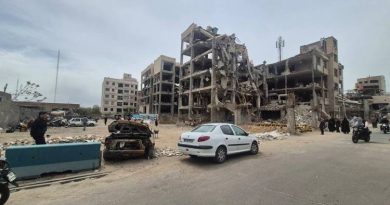
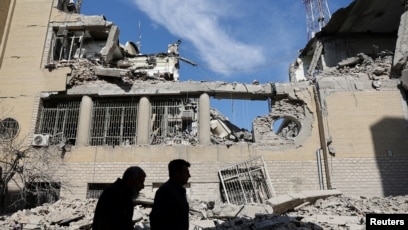
Everything we feared, we have now witnessed. The year of blood arrived. The year of tears arrived. The year of death and the year of fire came, each on time, each far more merciless than we had imagined.
Yet alongside these devastations, we have experienced something even more painful: the moral decline of a segment of Iranians, especially those living abroad who openly called for military intervention in their own country, who celebrated the prospect of destruction, who danced at the idea of bombs falling on the cities where they were born.
This, for me, was more bitter than any bomb.
An Afghan friend wrote to me: “I only lived in Iran for a few years, yet whenever I hear that a missile has struck somewhere in Iran, it feels as though a piece of my heart has been shattered. How is it that some Iranians feel nothing when their own country is attacked, and even dance?”
In recent months, I have spoken with several pro-war Iranians. I asked them why bombs failed to bring prosperity to Afghanistan, Libya, or Iraq, yet might somehow bring it to Iran. Most respond with striking self-assurance: “We are different.”
I know they may not truly reflect on my response, but I offer it anyway: Iraq was once one of the cradles of human civilization. Libya, with its vast oil wealth, enjoyed one of the highest standards of living in Africa. Afghanistan, before decades of conflict, was on a path toward modernization. They, too, likely believed they were “different.” But history has shown, time and again, that no one is different under the boots of war and the ruins it leaves behind.
Still, they insist: “We are different. Whatever is destroyed, we will rebuild, better.”
Where does such certainty come from? From thousands of years of history? From a belief in Iranian exceptionalism? From geopolitical significance? But did Iraq, Syria, and Libya not also possess deep histories, cultural achievements, and strategic importance?
The danger of believing oneself exceptional is this: once we imagine we have nothing to learn from others’ experiences, we condemn ourselves to repeating the very catastrophes we refuse to see.
Still, I continue the conversation, even knowing it will likely change no minds: “You say you will rebuild better, but with what resources? In what timeframe?”
Even under peaceful conditions, building a refinery takes years. Reconstructing a national network of oil and gas pipelines, built over more than a century, can take two or three decades. Under sanctions and instability, even longer.
Again, the refrain: “We are different.”
I respond: Does that mean time will stop for us? That the laws of economics and physics will be suspended?
…
At times, my patience wears thin, and I am tempted to say, How foolish. But instead I say: let us imagine that the day after destruction, everything is perfectly calm. Who will pay the trillions of dollars required for reconstruction? Will the same Western powers who now feed fantasies of liberation through destruction suddenly act with generosity? Did they rebuild Iraq or Libya—or did they extract billions from those very countries?
…
This manufactured sense of superiority blinds us.
It prevents us from learning from the suffering of others because we imagine ourselves exempt.
Yet the only way to be truly “different” is this: to learn from history, not deny it. A nation that refuses to learn from others will eventually experience those same lessons firsthand, in its own cities, in its own streets, on its own skin.
And now, under the echoes of bombardment and the glow of air defense systems, with the unforgettable image of some celebrating the ruins of their homeland, I find myself wishing that the new year, if only slightly, may be less harsh. Not because our wounds will quickly heal, nor because we will forget what we have endured, but because perhaps we may begin to imagine the slow, difficult work of starting again.
Tehran, 1 Farvardin 1405, 21 March 2026
*Former political prisoner, banned from journalism for thirty years by Iran’s Revolutionary Courts
**Iranian Women’s Center