If I Survive
Narrative of War from Within
*Taraneh Baniyaghoob
Translated by Raha Sabet Sarvestany
**IRWomen
A long, stretchedout week that has felt less like seven days and more like an entire year. As I write these lines on this Saturday morning, I still cannot grasp that only a week separates me from last Saturday.
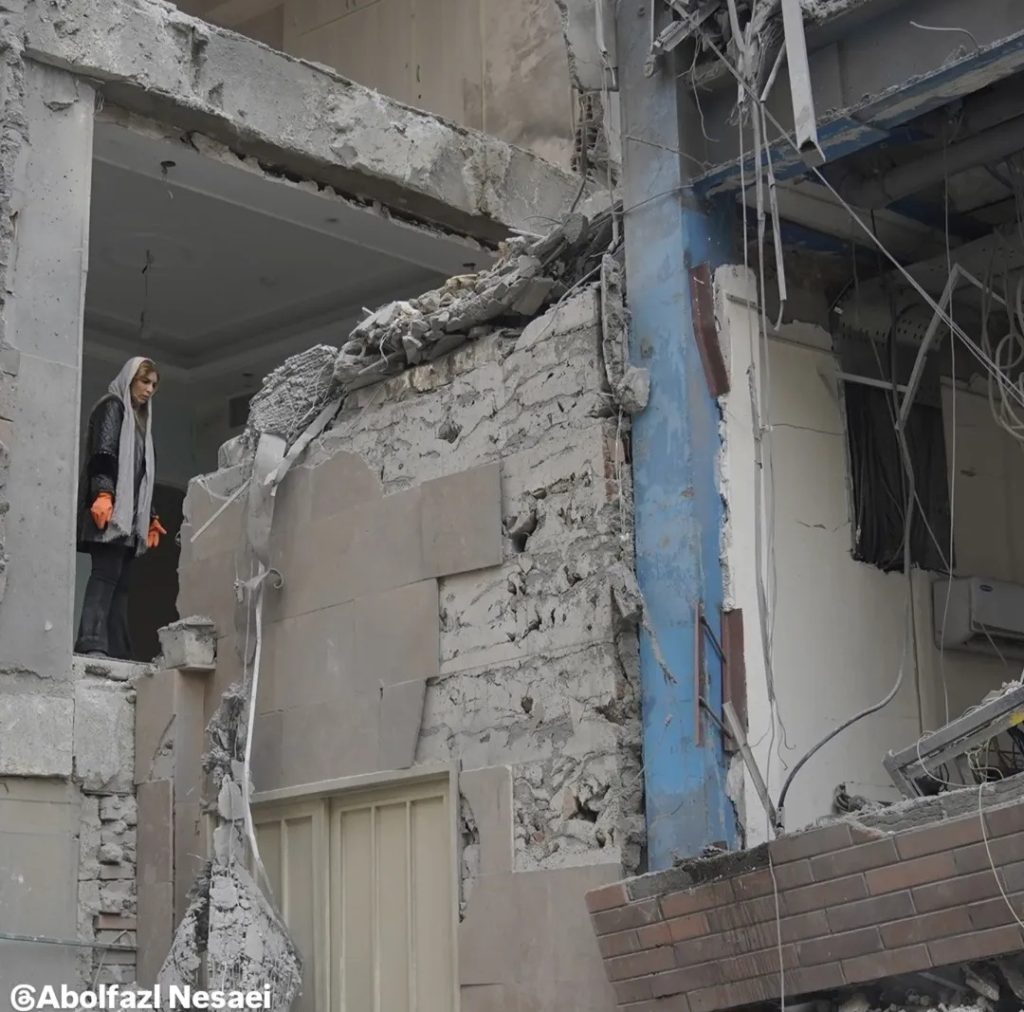
We live in eastern Tehran, an area repeatedly and brutally targeted. Not a single day or night has passed without the sound of explosions, the roar of fighter jets tearing through the sky, followed by wave after wave of relentless blasts.
The worst moment came on Friday morning. The ground shook, the windows rattled, and my husband and I held each other in the tiny shelter we call safety, the doorway frame, far from the windows, whispering what felt like a final goodbye.
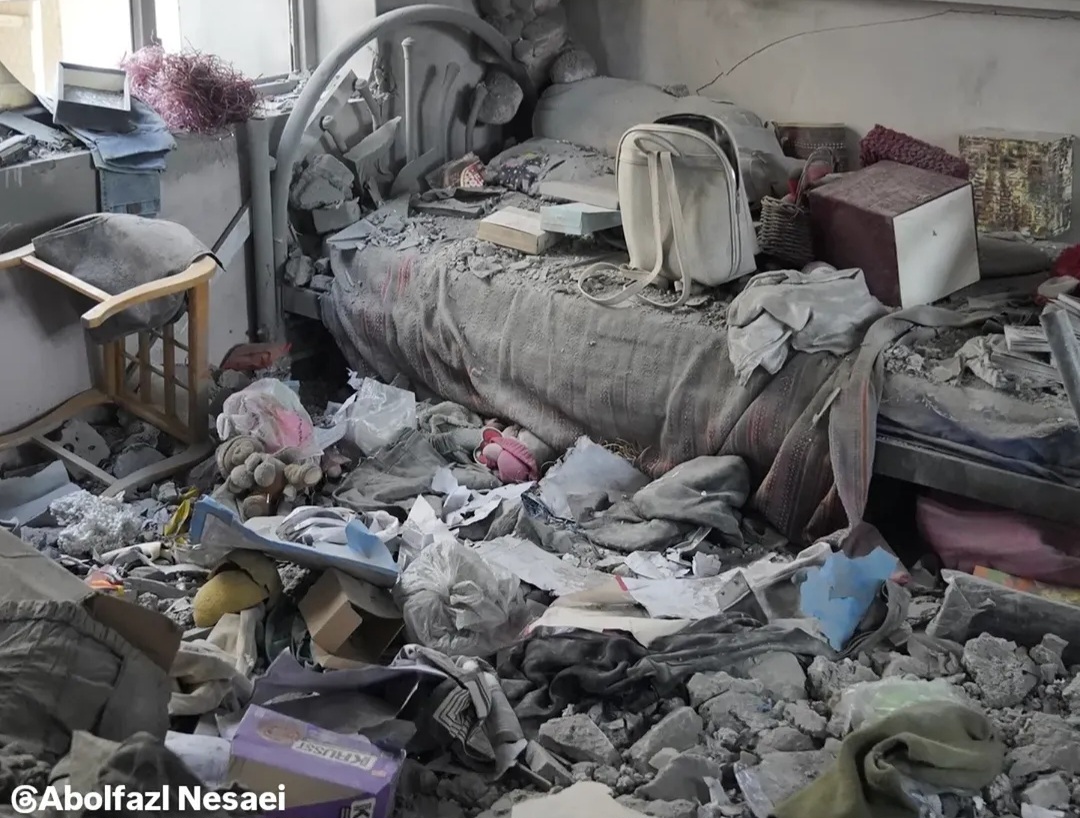
It has not even been a week since the second day of the war, when the alley beside our home was struck. I can still see our neighbor standing at our gate, trembling, tears streaming, telling us his small computer repair shop in the square had been reduced to rubble.
“People’s laptops are all destroyed, what am I supposed to tell them?” he said. Then, almost immediately, his voice cracked: “But that’s not even important… What am I supposed to do with the images of the bodies I saw? With all that debris?”
My former workplace in Niloufar Square was hit, too, a place filled with hundreds of memories. It used to be a lively, bustling street of small food shops and that infamous “Filthy Fry” sandwich place. A few days after the attack, I went back. Everything was gone. Nothing remained of the Niloufar police station. The crushed cars lining the street crushed my heart as well. Shards of glass, empty and damaged storefronts, and a street stripped of its noise, its crowds, its life.
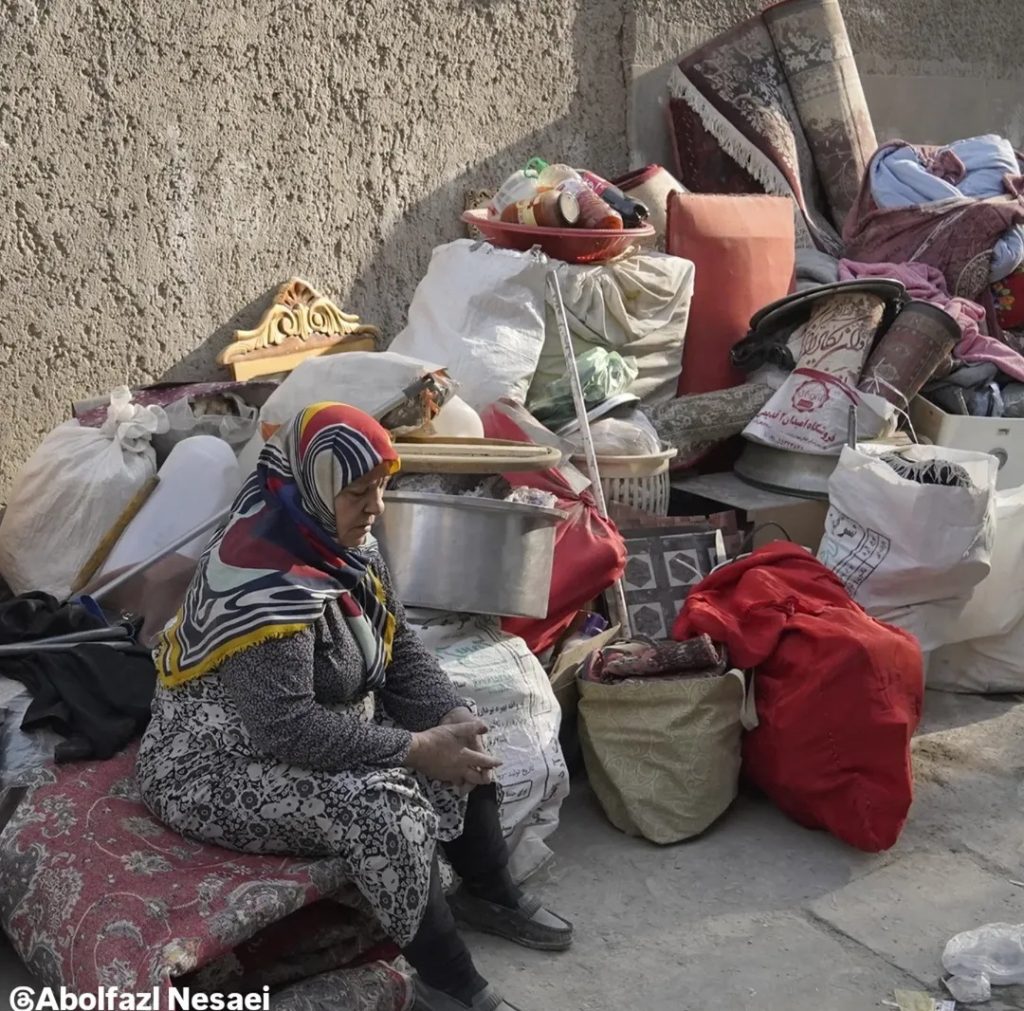
Last night, we stepped outside briefly to buy medicine. The unusually empty streets made my heart quake again. Only now do I understand how deeply I loved Tehran in all its traffic, noise, and pollution. Only a few shops were open. The bakery had shelves full of bread, but almost no customers. We bought two fresh barbari loaves.
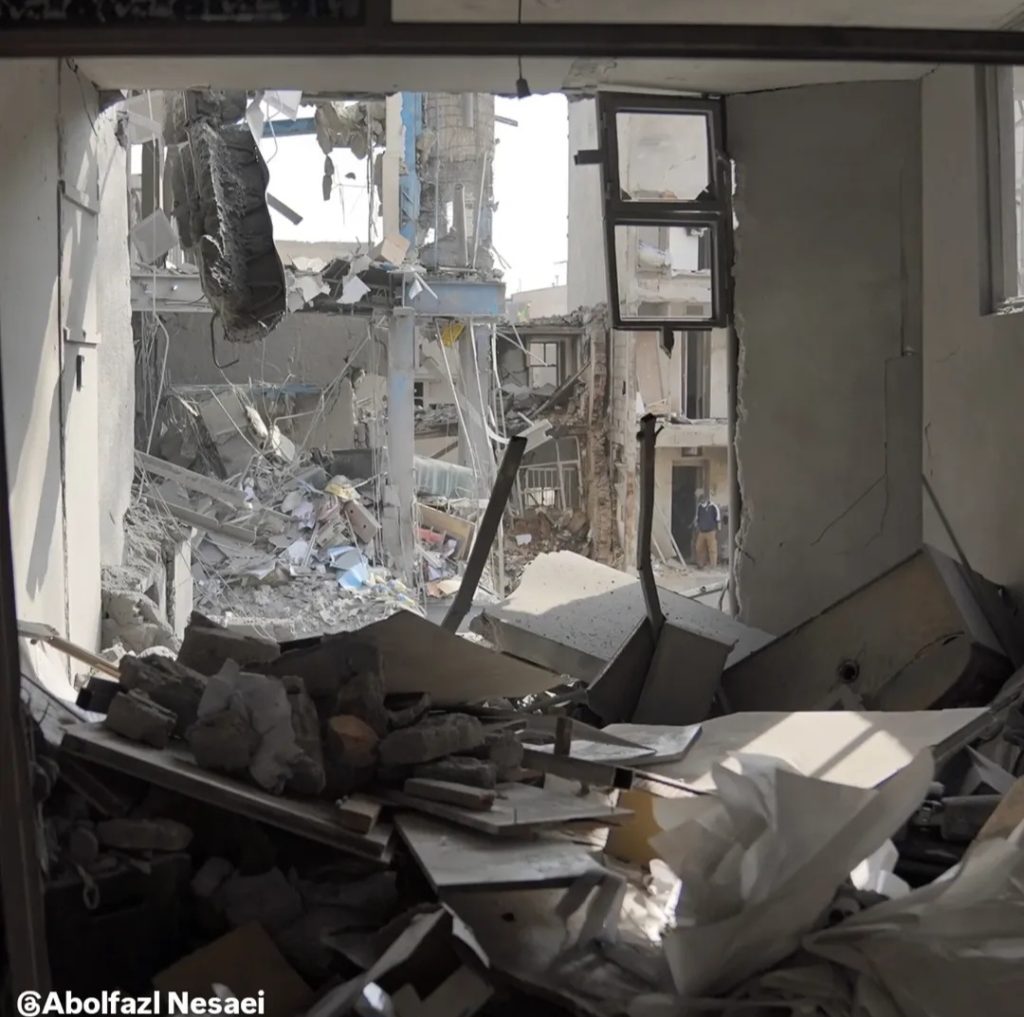
The trees are blossoming, turning green, but there is no smile on anyone’s face.
Everyone is asking the same question: When will this damned war end?
Will the new year begin without explosions, bombs, and missiles?
Will Tehran ever return to its lively, chaotic latewinter days?
I am still, as always, against war.
War will not bring us democracy or freedom.
War is absolute evil; it leaves nothing behind but devastation.
I have long been a critic of current conditions. I have written about these issues in my reports, acid attacks, poverty, inflation, the struggles of women and children, the lives of marginalized communities, and the countless hardships my people endure. For these reports, I have been interrogated many times.
But war has never been, and never will be, the solution to any of these problems.
I will remain here, in this sad and silent Tehran.
And I will continue to tell these stories,
if I remain alive…
The Eighth Morning: When the Sun Did Not Rise
It is eight in the morning, day eight of the war.
My husband is getting ready for work. We barely slept; once again, the explosions that echoed through the night kept us awake until dawn.
When I look toward the window, I hesitate. Why does it still feel like night, even though the clock insists it is morning?
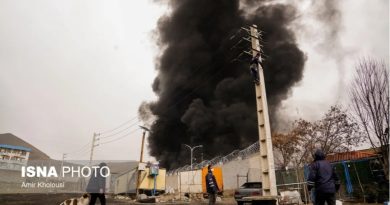
“The smoke from last night’s attacks on the oil facilities is blocking the sunlight,” my husband says quietly.
I had made an appointment at the hair salon. He tells me not to go out; the environmental warnings say the air is filled with toxic gases.
But I tell him it doesn’t matter. I need to go. I don’t want to lose the appointment; more importantly, I need to feel something like normal life. Eight days of tension, grim news, and nonstop explosions have left me breathless. I need a small breath of ordinary life just to endure.
Most salons in the city are closed, unlike this season, when they are usually full of customers preparing for the New Year.
As soon as I step outside, the air shocks me. Heavy, smoky, dim, as if burnt oil has been spread across the sky and ground. I’m wearing two masks. It reminds me of the worst days of COVID. How unbearable those days had seemed… yet now, compared to this, they almost feel simple. Even strangely sweet.
I get into the car with smoke. The driver hands me a disposable glove to use for opening the door. As we drive, he talks about last night in Tehran, a night when, in his words, “the city burned.”
The salon is empty except for me and the hairdresser. She sighs as she tells me she has had no customers, though she had hoped these pre–New Year days would bring good business.
A friend recommended this place. The salon I usually visit, near Niloufar Square, is closed, the explosion in that area caused too much damage.
The hairdresser tells me that during the last twelve-day war, they rented a house in the north to escape from the city, but it was so difficult that this time they decided to stay. “Whatever happens, happens,” she says.
I got my hair cut. For a brief moment, I felt lighter.
When I step back onto the street, still masked, a strange headache throbs behind my eyes. The air smells faintly of fresh garlic; they say it’s the toxic smoke from the oil depot explosions. I try not to think about it. I just want to walk.
The streets are somewhat busy, not like they usually are at this time of year, but there is movement. Life, stubbornly, is present.
A stylish young woman, masked and wearing headphones, walks briskly past me.
Closer to home, it is already near afternoon, yet it still feels as though dawn never truly arrived. As if today, the sun chose not to rise over Tehran.
Near our building, I heard several explosions. People pause, look up at the sky. Someone mutters that they are far away. Then, as if on cue, everyone returns to what they were doing.
The small grocery shop in our neighborhood is still open, shelves full. At least for now, there is no shortage.
Hassan, the 12-year-old Afghan boy who works there, darts around collecting items for delivery. I saw him every day during the last twelve-day war as well, carrying water bottles and food on his back. He never seemed afraid. His life is extraordinary; one day, I must write about him.
Outside, a man is on the phone, telling his family in Isfahan not to go out tomorrow, he says more warnings have been issued. The shopkeeper tries to calm him, but fear is etched clearly on his face.
I unlocked our door. More explosions.
Our days are slowly becoming bound to these sounds, to this constant fear.
And yet, whether we want it to or not, life goes on.
People buy groceries.
I cut my hair.
A young boy carries packages on his back to deliver.
It is as if we are learning, somehow, to live,
even beneath the shadows of bombs, missiles, and fighter jets.
On the eighth day of the war, the Rey oil refinery and several oil depots in Tehran were struck in military attacks carried out by the United States and Israel.
journalist and women’s rights activist*
Iranian Women’s Center*
Persian version for the first part
Persian version for the second part
Photos by: Abolfazl Nesaei